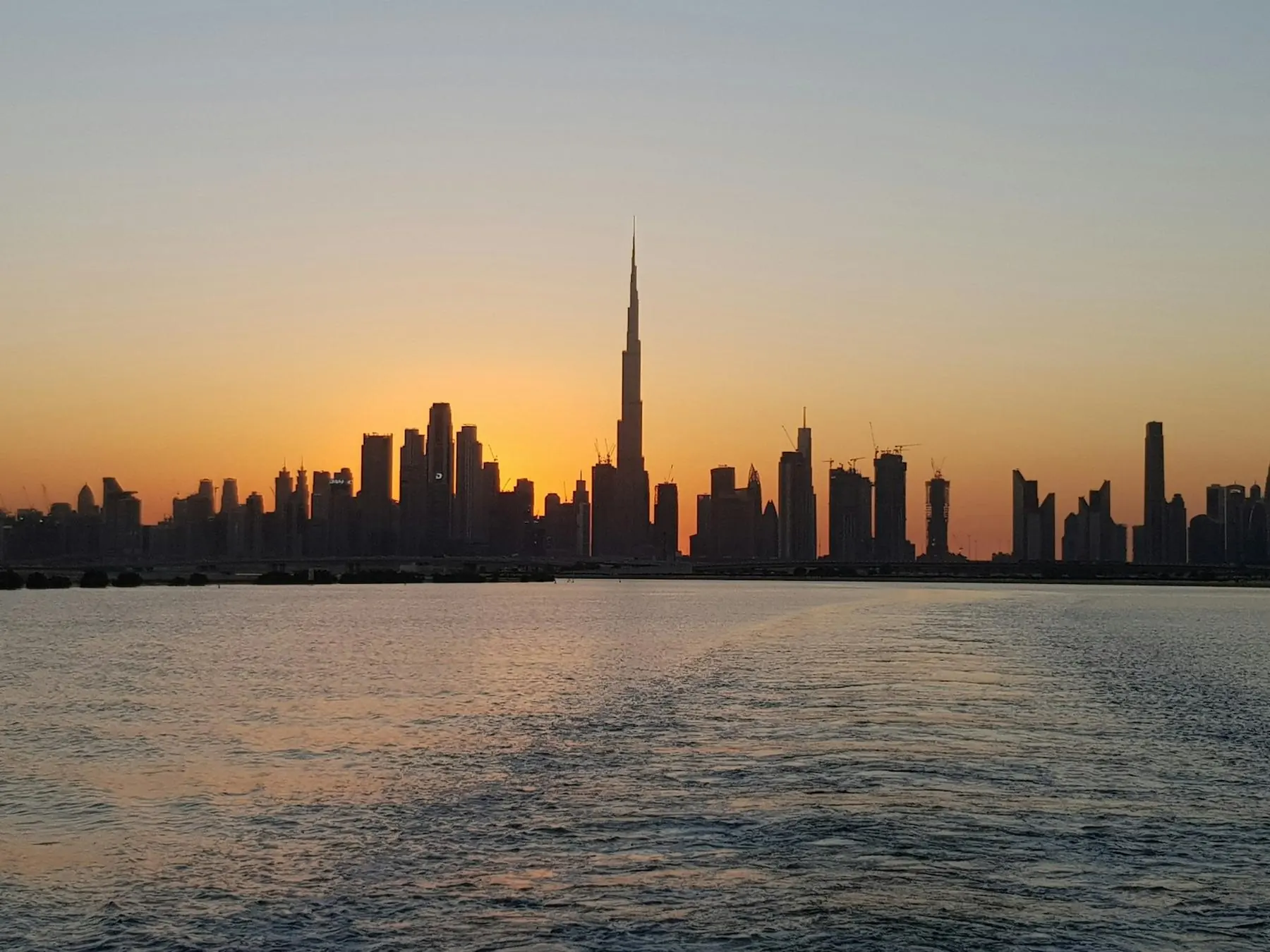
Dubai has been a trailblazer in almost everything it has built — infrastructure, aviation, tourism, master-planned communities. Branded residences are no different. In a little over a decade, Dubai has gone from a market with a handful of hotel-branded towers to the single largest concentration of branded residential product anywhere in the world.
The 2025 numbers confirm it. According to Morgan’s International Realty, Dubai closed the year with 166 branded residence projects and 51,692 units. Transaction value reached AED 79.1 billion ($21.36 billion) — a 38 percent increase year-on-year. Trophy transactions above AED 100 million doubled, from 11 in 2024 to 22 in 2025. Average achieved pricing rose 15 percent to AED 3,777 per square foot.
Savills independently counts 64 completed branded schemes and 87 in the pipeline — more than any other city globally. CBRE tracks a branded pipeline exceeding 31,000 units scheduled for delivery through 2030, representing approximately 8 percent of Dubai’s total new residential supply. The sector is projected to grow a further 80 percent over the next five years.
These are not niche numbers. Cross-referencing Morgan’s branded transaction data with Dubai Land Department figures for total residential activity in 2025 — 200,779 transactions worth AED 541.3 billion — branded residences account for roughly 6 percent of Dubai’s residential transaction volume but nearly 15 percent of total residential transaction value.
That ratio is significant. It tells you where the capital is concentrating: fewer transactions, larger tickets, deeper commitment at the top of the market.
But 2025 also marks a structural shift that the headline numbers do not immediately reveal.
For the first time, branded residence stock expanded faster than transaction growth. Total branded unit inventory grew approximately 20 percent year-on-year. Transaction volume grew just 2 percent. In 2024, transaction growth was 43 percent. In 2025, it effectively plateaued.
This is not a crisis signal. But it is a phase-change signal — and it will have consequences for how the market develops from here.
Miami: the one market that provides a meaningful reference
Dubai is difficult to compare to almost any market in the world. It operates on different terms in most things it does — scale, speed, ambition, regulatory environment. Comparisons to London, Singapore, or New York rarely hold up beyond surface level.
But in branded residences specifically, there is one parallel worth examining: Miami.
Not as a cautionary tale. As a reference point for how markets behave when they reach institutional scale.
Start with the branded residences comparison as it stands today. According to Savills, Dubai leads globally with 64 completed branded schemes and 87 in the pipeline — 151 in total. South Florida sits second with 48 completed and 55 in the pipeline — 103 schemes. No other city comes close; New York, in third place, has 36.
But that gap is relatively recent. In 2015, there were only 323 branded residence schemes globally. Miami’s branded residential presence at that time was a handful of landmark projects — Porsche Design Tower, Fendi Chateau, Ritz-Carlton Miami Beach — perhaps a dozen in total. Dubai’s branded inventory was similarly concentrated. The acceleration on both sides has happened largely over the past decade.
What makes the Miami comparison instructive is not just the branded segment. It is the broader residential pipeline behaviour that accompanied it.
Between 2011 and 2016, South Florida experienced one of its most concentrated condo build-out cycles. By April 2015, CraneSpotters.com — the specialist preconstruction tracking platform operated by Peter Zalewski — recorded 335 new condo towers with approximately 43,000 units announced across the tri-county region east of Interstate 95. Of those, 120 towers comprising roughly 13,200 units were already under construction. Miami-Dade County alone accounted for 215 towers and over 31,000 units. Prices had tripled from $320 per square foot in 2011 to over $1,000 by 2016.
Dubai’s total residential pipeline today operates at a different order of magnitude. According to Dubai Land Department data, approximately 726 residential projects are currently under construction across the emirate, with around 61,800 units scheduled for the remainder of 2025 and up to 240,000 new residential units expected between 2025 and 2027.
To put the scale comparison in perspective: Dubai’s branded residences alone — 51,692 units — now exceed the entirety of South Florida’s condo pipeline at its 2015 peak. That is the scale at which Dubai is operating in branded residential product alone.
What happened in Miami after the pipeline peaked was not a collapse. It was a maturation. Sell-through cycles extended. Luxury condo inventory reached record highs by late 2018. The preconstruction resale market cooled. Developers adjusted — some pivoted toward mixed-use, others extended payment terms. But Miami did not stop growing. Today, South Florida remains the second-largest branded residences market in the world, still launching projects, still attracting international capital. Branded residences in Miami sell at an average 32 percent premium over comparable non-branded properties, according to Knight Frank.
The growth continued. But the terms changed. Sell-through became more conditional. And over time, the questions that buyers asked evolved — from “what brand is it?” to “how does this building actually run, and what am I committing to long-term?”
Three things that are changing
The data from 2025 does not describe a market in difficulty. It describes a market crossing from one phase into another. Three specific shifts are worth examining — not because they represent problems, but because they will shape how the market operates from here.
Buyer motivation is shifting
Flat transaction volume alongside surging transaction value and accelerating trophy activity points toward capital concentration at the top of the market. One credible interpretation is that the speculative and flipping layer — which tends to amplify transaction counts — is thinning.
This matters because different buyer motivations produce different market dynamics.
A buyer purchasing off-plan with the intention of flipping before or shortly after handover cares primarily about entry price, payment-plan structure, and exit timing. Operating quality is largely irrelevant to that buyer — they expect to be out before it becomes visible.
A buyer purchasing for long-term residence or long-term hold asks fundamentally different questions. What are my ongoing costs of living? How will service charges evolve over the next decade? What am I committing to in terms of management quality, building upkeep, and community governance? What is the long-term value of this asset beyond the brand name attached to it?
If the buyer base is shifting toward committed capital — and the 2025 data is at least consistent with that interpretation — then the operating dimension of branded residences becomes more relevant to the market, not less.
Miami experienced exactly this transition. As speculative activity cooled after the pipeline peaked, the buyers who remained in the market were the ones asking operating and long-term cost questions. The same pattern tends to apply in any market where early-cycle momentum gives way to institutional depth.
In Dubai today, 82 percent of branded residence transactions are off-plan. Those buyers are underwriting promises about future operating performance — service delivery, cost structures, rental yields, management quality — that will only become verifiable years from now.
More delivered stock is entering the market
Of Dubai’s 51,692 branded units, 18,842 are already operational. Another 32,850 are under construction.
As pipeline projects complete and hand over to owners, the market will start producing real operating data at a scale it has not experienced before. Actual service charges. Actual rental yields. Actual management performance. These will become benchmarkable — and comparable — for the first time across a large number of projects simultaneously.
This changes the information environment.
In an off-plan-dominated market, the sales conversation is primarily narrative-driven: brand story, design renders, lifestyle positioning, location premium, payment plan. When delivered stock accumulates, the conversation becomes data-driven. Buyers — and their advisors — can compare what was promised at the point of sale with what is actually being delivered operationally.
The secondary and resale market will also become a more important indicator. With 82 percent of current transactions occurring off-plan, the market’s liquidity story is overwhelmingly a primary-sales story. As more units are delivered and original buyers consider resale, the spread between original purchase price and secondary market value becomes a leading indicator of market confidence.
Differentiation will widen. Projects with genuine scarcity, established brand credibility, and demonstrated operating quality will continue to clear at strong pricing. Projects that are less differentiated — branded primarily by name, without a clearly articulated long-term operating model — will begin to feel longer sell-through cycles and more competitive pressure.
This is a natural consequence of scale. It is how markets mature.
Regulatory and operating questions surface at handover
One important structural difference between Dubai and Miami at comparable stages of market growth: Dubai’s regulatory framework is significantly more developed.
RERA’s Building Manager licensing framework, mandatory service charge governance, and the Dubai Land Department’s centralised oversight provide structural protections that most markets — including Miami and much of Europe — only built after friction forced them to. This is a genuine advantage and it should be acknowledged clearly.
But regulation sets the floor. It does not resolve every question that arises when 50,000 branded units operate simultaneously across 166 projects — each with different brand agreements, different service delivery models, different ownership structures, and different contractual relationships between developer, brand, operator, and owner.
As more projects reach handover and enter their operational phase, a specific set of questions will move closer to the centre of the conversation:
How do service charges evolve over time — not just what they are at launch, but how escalation mechanisms work, who controls adjustments, and how owners participate in that process?
What authority does the brand operator actually hold in a branded residence? In a hotel, the operator typically controls the building. In a residential context, owners hold property rights. The boundary between brand standards and owner authority is not a legal grey area to be resolved later — it is a design decision that shapes everything downstream.
How do rental programmes perform across market cycles — not in the first year of operation when occupancy assumptions are fresh, but when those assumptions are tested by shifting demand, rising costs, or changing regulatory conditions?
And what mechanisms exist for adaptation over time? Not crisis management, but routine adaptation — how standards evolve, how costs are recalibrated, how the relationship between brand and owner adjusts over 10, 15, or 20 years.
These are not problems waiting to surface. They are design questions. The projects that resolve them clearly — before the first unit is sold — will be the ones that hold value, protect reputation, and sustain buyer confidence over time.
What to watch in 2026
The numerical outlook for Dubai’s broader residential market in 2026 is relatively stable. Knight Frank expects continued price appreciation of around 3 percent in the prime segment. Cushman and Wakefield Core projects mid-single-digit growth. Fitch Ratings notes significant delivery volumes scheduled, though historically only approximately 56 percent of announced residential supply in Dubai has delivered on time — suggesting the actual delivery wave may be more moderate than headline figures imply.
For branded residences specifically, the base case points toward transaction volumes in the 12,000 to 14,000 range, with total transaction value continuing to be driven by ultra-prime depth and trophy activity.
But the more revealing story in 2026 will not be in the headline numbers. It will be in the leading indicators that show how the market is structurally evolving:
Payment-plan structures. Are developers competing primarily on financing terms — longer post-handover plans, reduced deposits, deferred milestones? If payment-plan generosity increases significantly, it signals that clearing inventory requires more financial accommodation.
Broker incentive structures. Are commission rates and incentive packages expanding? This is typically one of the earliest and least visible signs of sell-through pressure in off-plan markets.
Secondary resale spreads. As early off-plan buyers approach handover or completion, are they able to exit at or above their entry price? Tightening or negative resale spreads would indicate that primary-market pricing has outpaced what the secondary market can sustain.
Operating narrative in marketing materials. When developers and brands begin communicating service charge transparency, operating credentials, and long-term management frameworks as part of the sales proposition — rather than relying solely on design, location, and lifestyle positioning — that is the clearest signal that the market is institutionalising. It is not a sign of weakness. It is a sign of depth.
The next chapter
Dubai has captured branded residences by storm. No other city on earth carries this scale in branded residential product — and the pipeline suggests that lead will widen further over the coming years.
Miami’s experience shows that growth does not stop when a market enters its institutional phase. It continues. But the basis of competition changes, the buyer conversation deepens, and the projects that endure are the ones where the operating model is as considered as the design.
Dubai’s regulatory foundation — through RERA and the Dubai Land Department — is stronger than what most markets had at an equivalent stage. That is a structural advantage few cities can claim.
The next competitive edge will not be more projects or more brand names. It will be operating clarity — at the project level, at the brand level, and in how the market communicates long-term value to buyers who are committing real capital for the long term.
Dubai is already the world’s largest branded residences market. The opportunity now is to also be the best run.
Data sources referenced in this article: Morgan’s International Realty, H2 2025 Branded Residences Report; CBRE, UAE Branded Residences Report 2025; Savills, Branded Residences Global Report 2025/26; Savills, Middle East and Africa Report 2025; Knight Frank, The Residence Report 2025/26 and Dubai Residential Market Review; Dubai Land Department, 2025 annual transaction data; CraneSpotters.com / Peter Zalewski, South Florida preconstruction tracking (April 2015); The Real Deal, Miami branded residences reporting; Cushman and Wakefield Core, Dubai market outlook 2026; Fitch Ratings, Dubai residential supply analysis.